
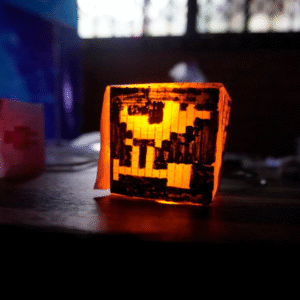
Project Report
Flash How You Feel
Report by:
Aninakwah Vera Yeboah
December 1, 2025
Citation
Quansah, S., Asante, V., Aninakwah, V. Y., Debrah, A. B., & Nsiah, N. A. A. (2023)
Tags
Abstract
This project built on the foundation of the Show How You Feel activity, introducing 68 learners aged 7–15 to the concept of loops, one of the most fundamental coding structures used by programmers worldwide.
Using the BBC micro:bit, learners created flashing emoji displays that represented their emotions, reinforcing prior learning in event handling and algorithmic thinking while adding iterative control flow to their programming toolkit.
This project deepened both digital skills and emotional literacy, supporting Sustainable Development Goals (SDG) 3: Good Health and Well-Being and SDG 4: Quality Education.
1.0 Introduction
Loops are a fundamental concept in computer science, allowing programmers to repeat a set of instructions efficiently without duplicating code. According to Wing (2006), understanding such core computational thinking concepts is key to developing problem-solving skills that transfer beyond programming.
In this project, learners applied for and while loops in a relatable, emotionally engaging task, making their micro:bit flash custom emojis to represent how they felt. Building on their earlier Show How You Feel project, they moved from displaying static emojis to creating dynamic, interactive animations.
This approach not only deepened learners’ coding skills, such as understanding inputs, outputs, and event handling, but also supported creativity, self-expression, and engagement. Research in constructionist learning (Papert, 1980) shows that when students program personally meaningful projects, they learn concepts more deeply while developing confidence as creators of technology.
2.0 Method
2.1 Learners
- Total learners: 68
- Gender representation: 34 males (50%), 34 females (50%)
- Age range: 7–15 years
- Learners aged 7–9: Used block-based coding
- Learners aged 10–15: Used Python programming
2.2 Mode of Delivery
- Virtual Live Sessions: Introduction to loops, revisiting event handling, and discussing real-life examples of repetition in both technology and nature.
- In-Person Sessions: Hands-on loop coding with BBC micro:bits, integrating flashing sequences into previously created emojis.
3.0 Results
3.1 Learning Outcomes
- Learners understood what loops are and how they simplify coding tasks.
- Strengthened skills in event handling, input–output, and LED matrix control.
- Learned to combine loops with emotional expression for more dynamic displays.
- Developed greater confidence in debugging and iterative problem-solving.
3.2 Project Activities
- Reviewing “Show How You Feel” projects.
- Introduction to for and while loops in MakeCode.
- Modifying existing emoji code to add flashing animations.
- Group sharing of creative flashing emoji designs.
3.3 Materials Used
- BBC micro:bit
- Computers with MakeCode editor
- Emoji planning sheets and loop diagrams
3.4 Project Code Repository
Learners used BBC micro:bit and Microsoft MakeCode to program emojis with loops for flashing effects.
4.0 Discussion
Enhanced Emotional Expression:
By adding motion through loops, learners’ emojis became more engaging, reflecting feelings in a livelier way.
Mental Health Awareness Integration:
Animating emotional states sparked further discussions about how moods can change and fluctuate, mirrored by the flashing patterns.
Coding Skill Development:
Learners applied loops, algorithmic thinking, event-driven programming, LED control, and input–output handling to create interactive displays.
Creativity and Project Ownership:
Learners proudly designed unique flashing effects, demonstrating problem-solving in sequencing and timing to match emotional intent.
5.0 Feedback and Reflections
Learners described the activity as ‘bringing emotions to life on the screen’ and expressed a sense of accomplishment in mastering loops, with many showing enthusiasm to explore more animations.
6.0 Challenges Faced
The Flash How You Feel project successfully built upon earlier learning by introducing loops in a meaningful, emotionally connected way. Integrating self-expression with coding skill development, fostered both emotional intelligence and programming competence.
7.0 Conclusion
This project was an emotional literacy experience.Learners discovered how to express themselves using technology, deepening their understanding of feelings and mental health.
The activity addressed both technical education and well-being, laying the foundation for more empathetic, expressive, and digitally empowered learners. It also advanced SDGs 3 and 4 by promoting healthy minds and equitable access to quality learning tools.
8.0 Contributors
- Sam Quansah – Principal Investigator & Curriculum Designer & Curriculum Designer
- Vera Yeboah Aninakwah – Lead Facilitator & Code Developer
- Nana Adwoa Nsiah – Instructional Facilitator
- Victor Ofori Asante – Instructional Facilitator
9.0 References
WHO (2021). Adolescent Mental Health.
CASEL. (2023). Social and Emotional Learning Framework.
Papert, S. (1980). Mindstorms: learners, Computers, and Powerful Ideas.
Vygotsky, L.S. (1978). Mind in Society: The Development of Higher Psychological Processes.
United Nations (2015). Sustainable Development Goals – Goal 3: Good Health and Well-being; Goal 4: Quality Education.
Wing, J. M. (2006). Computational thinking. Communications of the ACM, 49(3), 33–35.
Related Project Reports
Show How You Feel
Using principles of event handling and algorithmic thinking, learners developed a sense of agency in creating digital tools rather than simply consuming them.
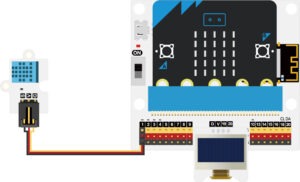
Monitoring Environmental Temperature
This experience supported digital literacy through coding and sensor use, scientific inquiry through real-world data collection and comparison, and environmental awareness by connecting learners’ observations to broader patterns.
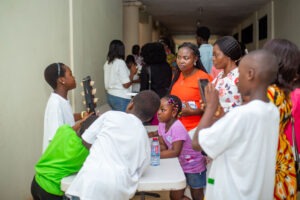
Traffic Light System
The activity was anchored in an authentic local context, addressing traffic congestion challenges at Kotokuraba Market in Cape Coast.
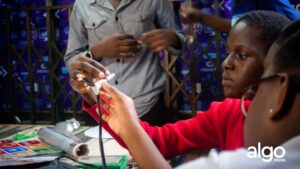
Energy-Efficient Streetlight
The activity was anchored in an authentic local context, addressing traffic congestion challenges at Kotokuraba Market in Cape Coast.

Debugging of the Energy-Efficient Streetlight
Learners applied active recall to retrieve prior knowledge from a previous streetlight programming activity and transfer it to the debugging process.
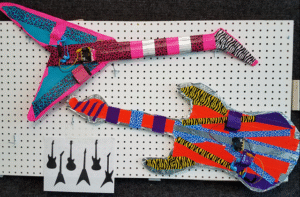
Plastic Musical Instrument
Exploring opportunities for technology integration by using BBC micro:bit sensors to enhance sound effects